
How AI agents actually work in ecommerce
July 15, 2026 · 5 min read
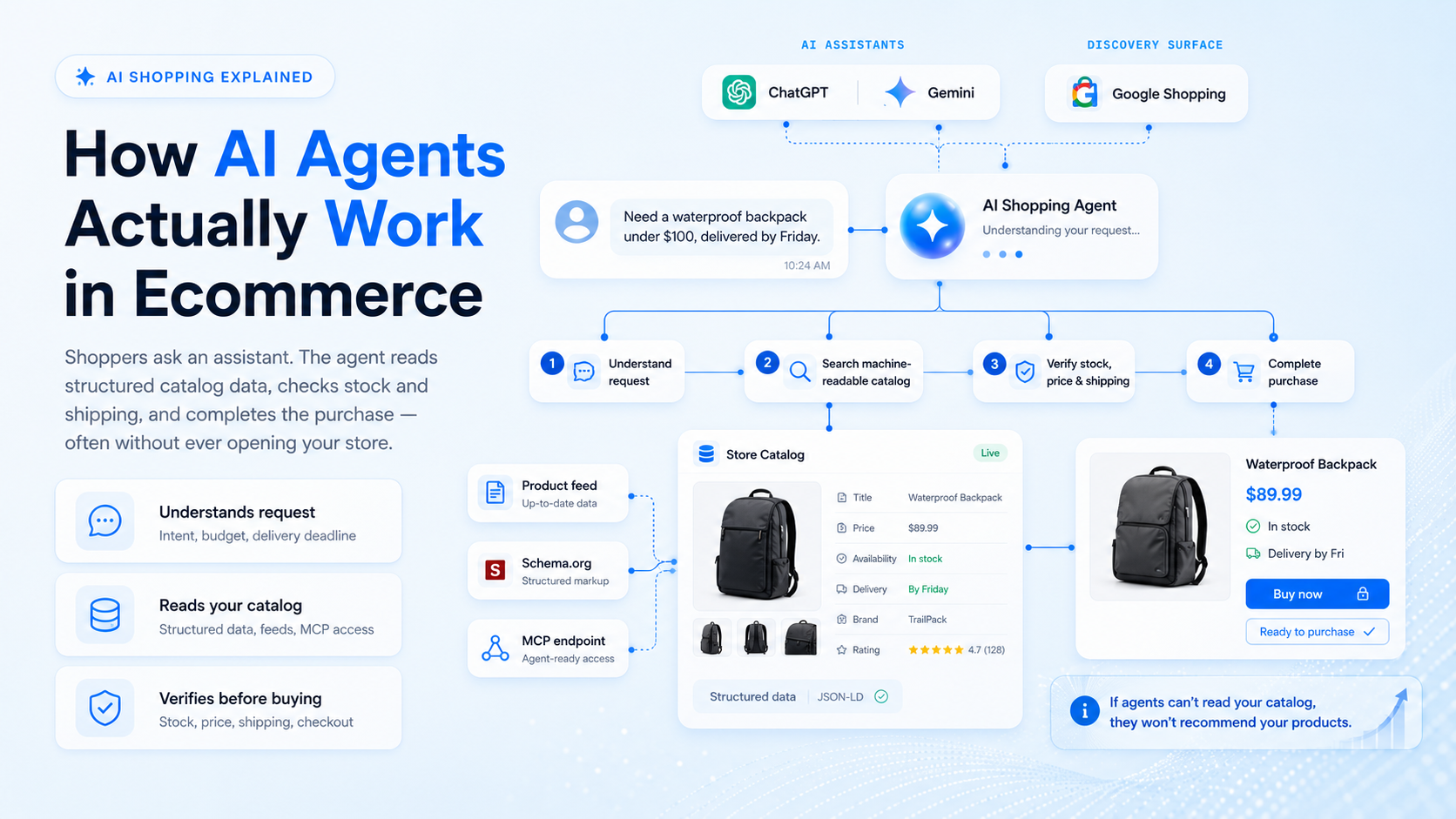
Consider a shopper who is texting away to their AI assistant thus: “I need a waterproof backpack for under $100. I need this delivered by Friday.” This shopper’s AI assistant would have responded within 10 seconds by searching the web, finding your store (if they can find your store) and ascertaining whether or not you have said product in stock and what their shipping would be for said product. And then, the shopper would proceed to place their order – all without ever having visited your website, the order being placed without ever having a browser tab open to your website. And as I’ve already said, Google has incorporated this functionality into Google’s Shopping results and OpenAI have already incorporated this functionality into ChatGPT. And here’s the catch: most online stores can’t be found by these agents.
Most people talk about shopping in a ‘mystery shopping’ kind of way, wondering if people will click on to your home page. It is a completely different world now and it’s not about getting people to your home page. It is a matter of whether an AI can read what you sell.
What an AI agent actually does
An AI assistant operates in 3 ways to process a shopper’s request, including finding products. First the AI assistant understands the request made by a shopper, which ChatGPT and Gemini can already do for you. Then the AI processes the request to find products that match within a store’s product catalog. This is where the vast majority of businesses will go wrong. The agent does not browse through a retailer’s website in the same way that a human would browse through a homepage. Instead, the agent can only read through machine readable structured data which is fed from a retailer’s product catalog. If a retailer does not have this data feed, then the agent will not be able to find any products within that retailer’s store. As a result, the agent will proceed to another retailer’s store where it can read the machine readable structured data from that retailer’s product catalog. Thirdly, the AI assistant processes the found products to verify stock, prices, and other details for a shopper including the shopper’s shipping address.
Step 3 of the process the AI uses to shop online is to verify that what the shopper has asked for is real – that there is stock available, that the price is correct and that the shopper is in the shipping address area. Once the AI has verified all of this it then completes the purchase. The whole process from start to finish takes seconds to complete. But for the process to work in the first place, your online catalog must be read by the AI shopping assistant. If it can’t read your online catalog then the AI shopping assistant will never know that you sell the products that the shopper is looking for and so the shopper will never have the chance to visit your online store.
Your competition might already be ahead
Of course, another store is selling better products at competitive prices, with machine-readable product information that the AI shopping assistant reads first. The shopper finds store B’s product as the best shopping option and buys from them instead of your site. And, you get zero traffic from that agent-driven search.
The good news is that Dreamvention does not recommend stores to start from scratch and spend a lot of money to prepare their online store for agent shopping. Also, there is no need to switch platforms or even to open the homepage of your online store. By adding the necessary structured data to the products in your online store, by wiring up the catalog of your online store so that it can be read by AI assistants, and by setting up an MCP endpoint to allow outside AI assistants to query your online store directly, stores can be prepared for agent shopping in no time.
Why the timing matters
This is a golden period of opportunity for stores. With the majority of competitors not yet enabling their store to be read by AI shopping assistants, the first to implement a solution will have a competitive advantage of several months of traffic from these emerging shopping channels. In the best case, a store could be recommended by Google Shopping, or be shopped from within the popular AI assistants ChatGPT and Gemini, ahead of their competitors.
And if you wait, you are not just losing out on new customers who are using these services to shop, you are handing them over to everyone else.
Start here
Dreamvention has built a free 30 second scan that will reveal what an AI shopping assistant can see on your store. It will even grade your agent-readiness from A to F. Find out for free here: http://dreamvention.com/scan (no email, no sign up required).
Get AI Commerce Tips
5 expert tips to grow your store with AI agents.
No spam — unsubscribe with one reply.
Read next
ChatGPT's 11.4% conversion rate beats every traditional channel—here's why
New data shows ChatGPT-referred traffic converts 3…
Read →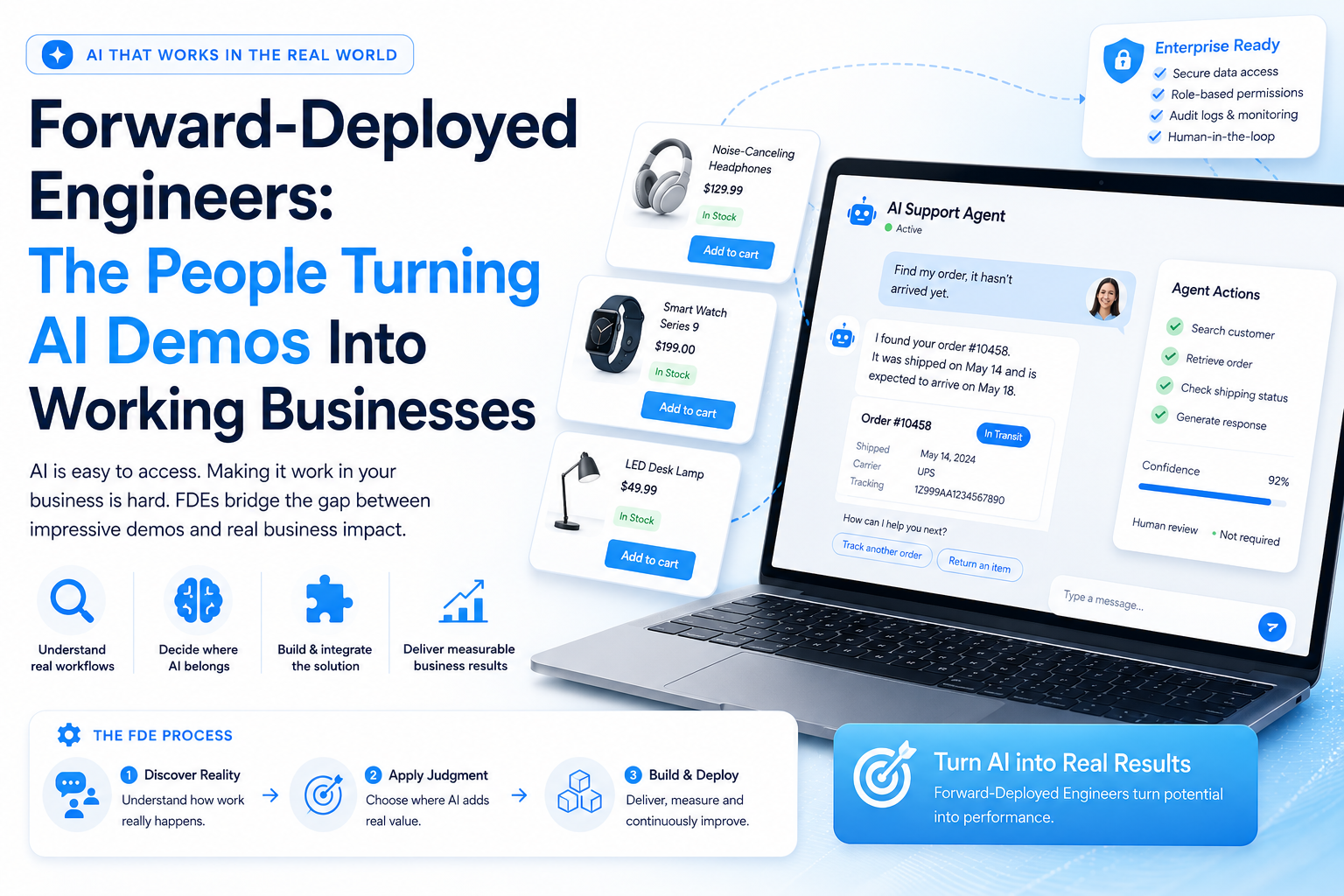
What is it FDE (Forward-Deployed Engineers)? How AI Moves From Demo to Profit
Connecting ChatGPT to your store is easy. But doin…
Read →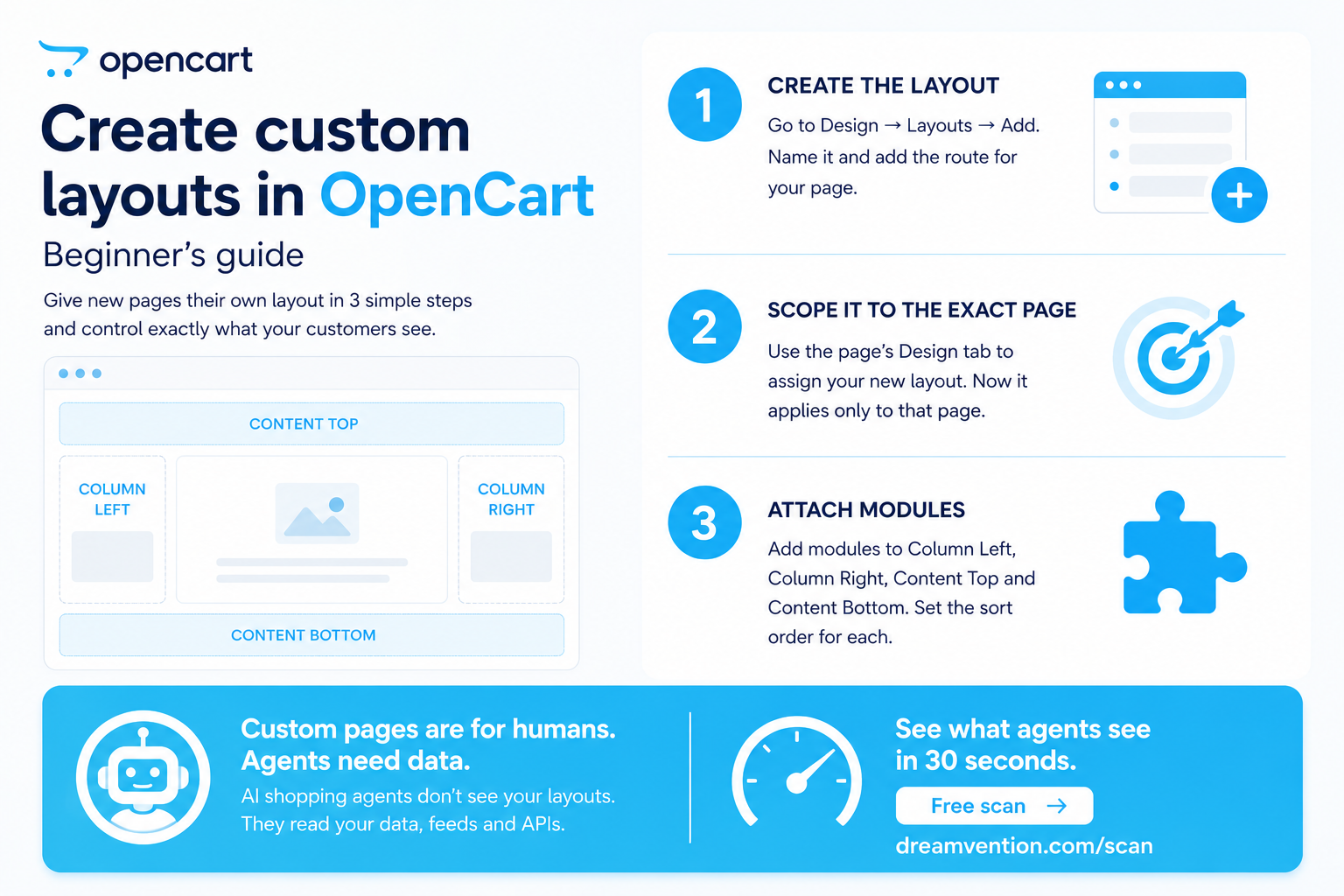
Create custom layouts in OpenCart: beginner's guide
Learn how to create and customize layouts in OpenC…
Read →Put a sales agent on your store
It knows your catalog, recommends, takes orders — on your site and in ChatGPT. Built for you — live in days, not months.